Nirvana Lab

Home / Blog / Kubernetes on Cloud: Managing Containers at Scale  
Table of Contents

Kubernetes on Cloud: Managing Containers at Scale  

Kubernetes on Cloud: Managing Containers at Scale

In the cloud-native orbit, organizations prioritize deploying and managing applications with maximum efficiency. Kubernetes, the leading container orchestration platform, has become the backbone of modern infrastructure, enabling businesses to run scalable, resilient, and portable workloads across cloud environments. 

As enterprises increasingly adopt microservices and distributed architectures, Kubernetes on the cloud offers a powerful solution for container scaling, automation, and high availability.  


However, managing Kubernetes at scale comes with challenges (security, performance optimization, and cost efficiency) being among the most critical. 


In this blog, we’ll explore how Kubernetes empowers cloud-native deployments, best practices for container scaling in cloud, and essential Kubernetes security best practices to ensure a robust infrastructure. 

Why Kubernetes for Cloud-Native Deployments?

Kubernetes has emerged as the de facto standard for managing containerized applications, and for good reason:

1. Automated Scaling & Load Balancing

Kubernetes dynamically scales applications based on demand, ensuring optimal resource utilization. With Horizontal Pod Autoscaler (HPA) and Cluster Autoscaler, workloads can efficiently handle traffic spikes without manual intervention.

2. Multi-Cloud & Hybrid Cloud Portability

A key advantage of Kubernetes is its ability to run seamlessly across different cloud providers (AWS, GCP, Azure) and on-premises environments. This flexibility prevents vendor lock-in and enhances disaster recovery strategies.

3. Self-Healing Capabilities

Kubernetes monitors container health and automatically restarts failed containers, replaces unresponsive nodes, and ensures high availability, critical for mission-critical applications.

4. Declarative Configuration & GitOps

Infrastructure-as-Code (IaC) principles are deeply integrated into Kubernetes, allowing teams to define desired states using YAML/JSON manifests. Tools like ArgoCD and Flux enable GitOps workflows, ensuring consistency across environments.

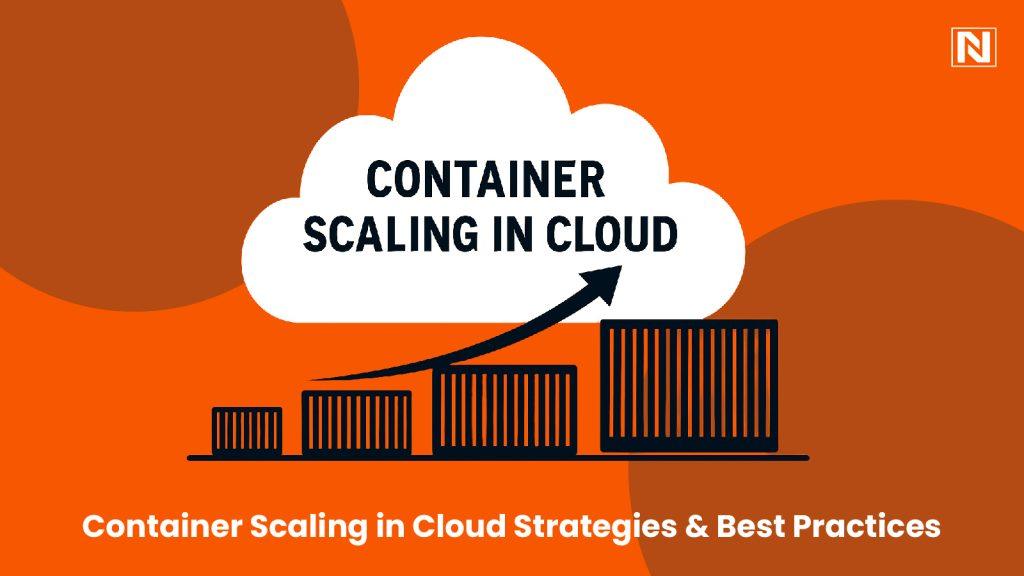
Container Scaling in Cloud: Strategies & Best Practices

One of Kubernetes’ most powerful features is its ability to scale containers efficiently. However, scaling effectively requires a well-thought-out strategy:

Container Scaling in Cloud: Strategies & Best Practices

1. Horizontal vs. Vertical Scaling

  • Horizontal Scaling (HPA): Adds more pod replicas to distribute load. Ideal for stateless applications. 
  • Vertical Scaling (VPA): Increases CPU/memory allocation per pod. Best for stateful workloads with unpredictable resource needs.

2. Cluster Autoscaling

Cloud providers offer managed Kubernetes services (EKS, AKS, GKE) with built-in cluster autoscaling, which provisions or deallocates nodes based on demand. This optimizes costs while ensuring performance.

3. Optimizing Resource Requests & Limits

Misconfigured CPU/memory requests can lead to wasted resources or pod evictions. Use monitoring tools like Prometheus and Grafana to fine-tune allocations.

4. Spot Instances & Cost Efficiency

Leveraging spot instances (AWS Spot, Azure Spot VMs) for non-critical workloads can reduce cloud costs by up to 90%. Kubernetes’ tolerations/affinity rules help manage spot instance interruptions gracefully.

Kubernetes Security Best Practices for the Cloud

As Kubernetes adoption grows, so do security risks. Implementing Kubernetes security best practices is non-negotiable:

Kubernetes Security Best Practices for the Cloud

1. Role-Based Access Control (RBAC)

Restrict user and service account permissions using RBAC. Follow the principle of least privilege (PoLP) to minimize attack surfaces.

2. Network Policies for Zero Trust

Use Network Policies to segment traffic between pods, preventing lateral movement in case of a breach. Calico and Cilium are popular CNI plugins for advanced security.

3. Secrets Management

Avoid hardcoding credentials in manifests. Instead, use Kubernetes Secrets or external secret managers like HashiCorp Vault or AWS Secrets Manager.

4. Image Scanning & Supply Chain Security

Scan container images for vulnerabilities using tools like Trivy, Clair, or AWS ECR scanning. Implement Sigstore for signing and verifying artifacts.

5. Regular Updates & Patch Management

Kubernetes releases frequent updates with critical security fixes. Stay on supported versions and automate patch management where possible.

Challenges of Running Kubernetes at Scale

While Kubernetes is powerful, managing large-scale deployments introduces complexities:

  1. Operational Overhead – Managing clusters, upgrades, and troubleshooting requires skilled DevOps teams. 
  2. Storage Management – Stateful workloads need persistent storage solutions like CSI drivers (EBS, Azure Disk, etc). 
  3. Observability & Monitoring – Distributed systems generate massive logs/metrics. Tools like Elasticsearch, Loki, and OpenTelemetry help maintain visibility.
  4. Cost Control – Unoptimized clusters can lead to unexpected cloud bills. Use Kubecost or cloud-native cost tools to track spending.

Conclusion

Kubernetes has revolutionized cloud-native application deployment, offering unmatched container orchestration, scalability, and resilience. However, success requires adopting Kubernetes security best practices, optimizing container scaling in cloud, and continuously monitoring performance.

For developers and decision-makers, mastering Kubernetes means unraveling faster deployments, cost savings, and future-proof infrastructure. Whether you're running a startup or an enterprise, Kubernetes on the cloud is the key to managing containers at scale, efficiently and securely.

Are you leveraging Kubernetes in your cloud strategy? Share your experiences in the comments!
Frequently Asked Questions

What is Kubernetes container orchestration?

Kubernetes automates the deployment, scaling, and management of containerized applications, ensuring high availability and efficient resource utilization across cloud environments.

Kubernetes provides portability across multi-cloud and hybrid environments, automates scaling, and integrates with CI/CD pipelines, making it ideal for cloud-native applications. 

Use Horizontal Pod Autoscaler (HPA) for stateless apps, set proper resource requests/limits, leverage cluster autoscaling, and optimize with spot instances for cost efficiency. 

Implement RBAC, enforce Network Policies, use Secrets Management, scan container images for vulnerabilities, and keep Kubernetes updated with the latest security patches. 

Unoptimized resource allocation, overprovisioned nodes, and lack of monitoring can lead to high costs. Tools like Kubecost help track and optimize spending. 

Author