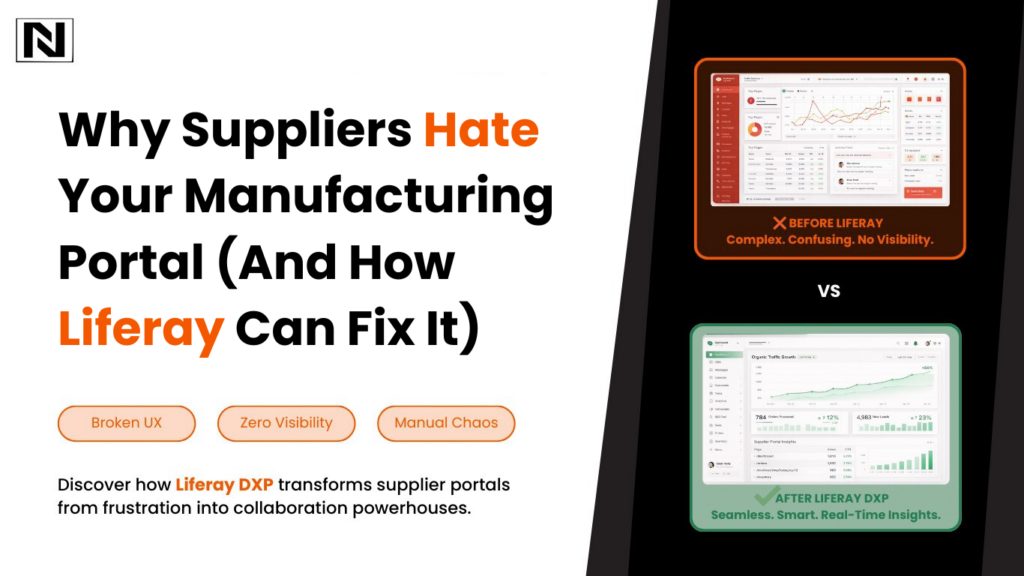
In manufacturing, supplier portals are having to make collaboration properly, but many suppliers are tired using these portals due to frustrating issues that reduce productivity and collaboration. This article explores the common issues of manufacturing supplier portals and how Liferay’s platform can transform them into tools suppliers will love.
The Struggles of Manufacturing Supplier Portals
Supplier portal's goal to streamline communication and operations between manufacturers and suppliers. Unfortunately, many portals fail to deliver on this.
Common Complaints from Suppliers
If you ask suppliers about manufacturing portals, you will mostly hear a few common complaints. Many of them say the systems are difficult to use, not give personalization, and feel outdated or old, also simple tasks can become frustrating when navigation is not proper or the layout is not proper. And when guides are limited, suppliers mostly need to wait for someone from the support team just to complete basic actions.
The second issue is that suppliers frequently mention limited visibility into important data. In some portals, it's difficult to view data like current purchase orders, shipment progress, or payment timelines. Without that information readily available, suppliers face challenges to manage their things.
Impact on Supplier Relationships and Business Processes
These issues don't just frustrate suppliers; it's also straining relationships. Wrongly or complex designed supplier collaboration platforms create inefficiencies, leading to delays in process, miscommunication, and missed opportunities. These kinds of issues can reduce trust. If suppliers constantly face issues with the portal, they may slowly shift their focus to those companies that are easier to work with.
To solve these challenges, businesses not just improve supplier issues but also improve overall operational processes.
Key Pain Points in Current Supplier Portals
Understanding the exact issues in existing portals is the main point to creating solutions that work. Below are some of the most common issues.
Lack of Personalization and User-Centric Design
Many portals don't have the ability to tailor experiences to individual suppliers. This type of portal approach mostly results in workflows and interfaces that don't give everything which needs.
Integration and Data Visibility Challenges
Old portals mostly struggle with integration challenges. They fail to connect with enterprise systems, like ERP and CRM platforms. This issue of integration hinders visibility into supply chain processes, making it difficult for suppliers and manufacturers to align on the same goals.
Workflow Inefficiencies and Manual Processes
Manual processes are the issue of legacy portals. Tasks like submitting invoices, tracking shipments, or updating procurement details mostly require repetitive manual input, which is time-consuming and may raise issues or errors.
| Legacy Supplier Portal Issues | Modern Liferay Supplier Portal Capabilities |
|---|---|
| Poor user experience and outdated design | Intuitive, user-friendly interfaces |
| Limited data integration | Seamless integration with ERP, CRM, and other systems |
| Manual workflows | Automated, streamlined workflows |
| Siloed data | Centralized data visibility across the supply chain |
How Liferay Transforms Supplier Portals
Liferay offers a robust solution to supplier portal issues through its Digital Experience Platform (DXP). Here is how it addresses common problems and enhances supplier collaboration.
Addressing Integration Challenges with Liferay DXP
Liferay DXP solves integration challenges by becoming a middle layer that bridges between systems. It ensures that data transfer and available between your ERP, CRM, and other critical platforms, providing centralized visibility.
| System Component | Role in Integration | Key Benefits |
|---|---|---|
| ERP Systems | Manage procurement and inventory | Ensures real-time data synchronization |
| CRM Platforms | Handle supplier relationships | Improves communication and collaboration |
| Liferay DXP Middleware | Unites all systems seamlessly | Enables a single source of truth |
Improving User Experiences and Personalization
With Liferay, you can create a supplier portal that prioritizes design for end users. Its customizable interface allows you to update or modify experiences based on supplier roles, preferences, and tasks. This personalization simplifies workflows and increases engagement.
Leveraging Liferay for Supply Automation
Supply automation is another good feature of the Liferay supplier portal. By automating repetitive tasks like invoice processing and purchase order management, Liferay reduces errors and frees up time for more strategic activities.
Real-World Applications: Supplier Dashboards and Insights
A well-designed supplier dashboard is crucial for fostering collaboration and improving supplier performance. Liferay platform empowers manufacturers with practical, dynamic dashboards that make a real difference.
The Role of Dashboards in Supplier Collaboration
Supplier dashboards consolidate required information into a single view. This helps suppliers access real-time updates on purchase orders, shipments, and payment statuses without navigating through multiple systems.
Practical Features of a Liferay-Powered Supplier Dashboard
Liferay-powered dashboards come equipped with features that enhance supplier performance tracking and collaboration.
| Purchase Orders | Shipment Tracking | Invoice Status | Notifications |
|---|---|---|---|
| View and approve POs | Monitor real-time shipments | Track payment progress | Receive alerts for delays |
| Download PO documents | Update shipment schedules | Resolve invoice issues | Get reminders for tasks |
These practical features make it easier for suppliers to stay informed and act quickly, improving overall efficiency and responsiveness.
Modern Supplier Portal Architecture in Manufacturing
Liferay-powered dashboards come equipped with features that enhance supplier performance tracking and collaboration.
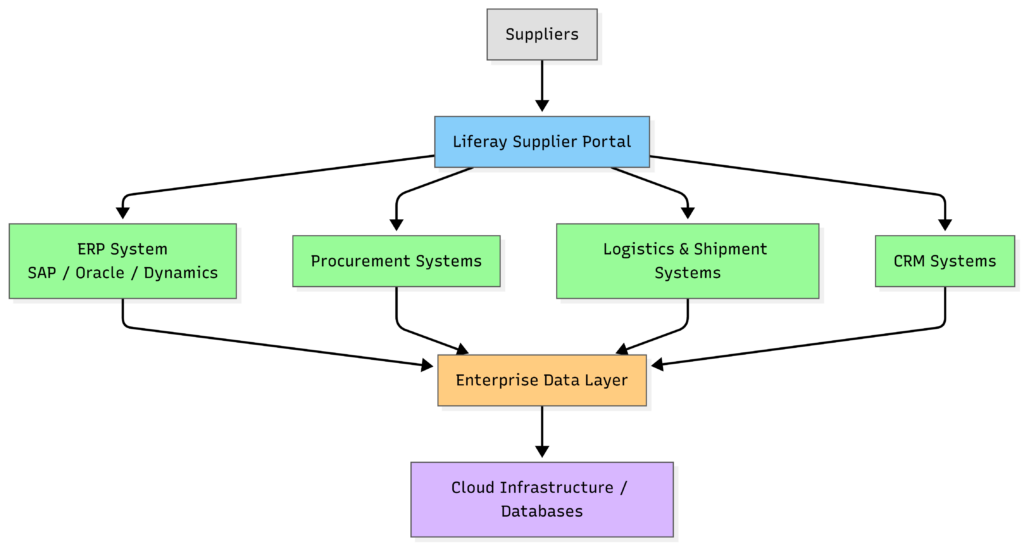
A modern manufacturing supplier portal is not just a standalone system. It works as a central collaboration layer that connects suppliers with multiple enterprise systems such as ERP, procurement, logistics, and inventory platforms.
Instead of forcing suppliers to log in to several systems, the portal becomes a single place where they can access all the information they need.
In many modern implementations, Liferay DXP works as the experience layer that connects backend systems while providing a clean and easy interface for suppliers.
| Layer | System | Purpose |
|---|---|---|
| Experience Layer | Liferay Supplier Portal | Provides interface for suppliers and procurement teams |
| Integration Layer | REST APIs / Middleware | Connects portal with backend systems |
| Enterprise Systems | ERP, CRM, Procurement Systems | Manage purchase orders, supplier records, and payments |
| Logistics Systems | Shipment Tracking Platforms | Provide delivery and shipment updates |
| Data Layer | Enterprise Databases / Cloud Storage | Store operational data and transaction history |
In this architecture:
- Suppliers interact mainly with the portal interface
- Liferay connects to backend systems using APIs
- Data from ERP, procurement, and logistics systems becomes visible in one place
This structure helps manufacturers provide better visibility to suppliers while maintaining control of internal systems.
Typical Supplier Workflow in a Manufacturing Portal
Liferay-powered dashboards come equipped with features that enhance supplier performance tracking and collaboration.
To understand the value of a modern supplier portal, it helps to look at a common workflow between suppliers and manufacturers.
In many organizations, suppliers interact with the portal during the entire lifecycle of a purchase order – from receiving the order to submit the invoice.
| Step | Action | Description |
|---|---|---|
| 1 | Purchase Order Created | Manufacturer creates a new purchase order in ERP |
| 2 | Supplier Notification | Supplier receives portal notification about the order |
| 3 | Order Review | Supplier reviews quantities, delivery schedule, and requirements |
| 4 | Order Confirmation | Supplier confirms the order through the portal |
| 5 | Shipment Update | Supplier updates shipment status or tracking information |
| 6 | Invoice Submission | Supplier uploads invoice through the portal |
| 7 | Payment Update | Supplier tracks payment status through the dashboard |
With traditional portals, many of these steps require manual communication such as emails or spreadsheets.
However, with a Liferay-powered supplier portal, most of these actions can happen directly within the platform.
For example:
- Suppliers can receive automatic notifications when new orders are created.
- Shipment updates can be integrated with logistics tracking systems.
- Invoice submission can trigger automated approval of workflows.
- Payment updates can be synced with the ERP system.
This reduces delays and helps both suppliers and procurement teams stay aligned.
Data Visibility Across the Supply Chain
Another key advantage of modern supplier portals is improved data visibility.
Suppliers often struggle when important information is spread across multiple systems. A centralized portal helps bring this information together.
| Data Type | What Suppliers Can See | Benefit |
|---|---|---|
| Purchase Orders | Order status, quantities, delivery timelines | Faster order management |
| Shipment Tracking | Shipment progress and delivery updates | Better logistics planning |
| Invoice Status | Submitted invoices and payment updates | Financial transparency |
| Performance Metrics | Delivery performance and supplier ratings | Continuous improvement |
When suppliers have access to accurate and timely information, they can plan their operations more effectively.
For manufacturers, this visibility also improves coordination across procurement, logistics, and finance teams.
Conclusion: The Future of Supplier Collaboration with Liferay
To make modern supplier portals are not only optional, but it is also required to stay competitive and foster strong supplier relationships. Liferay platforms not only solve existing portal challenges but also position businesses for long-term success.
The Benefits of Transitioning to a Modern Supplier Portal
Liferay for manufacturers can create a supplier collaboration platform that is intuitive, integrated, and automated. This improves supplier satisfaction, reduces inefficiencies, and strengthens partnerships.
How Liferay Supports Sustainable Digital Transformation
As a digital supply chain platform, Liferay helps manufacturers move forward with their digital transformation in a practical way. By automating routine workflows and bringing important data into one place, it gives both manufacturers and suppliers better visibility across the supply chain.
Adopting a Liferay-based supplier portal can also strengthen collaboration. When suppliers have easier access to information and simpler tools to manage their work, the entire process becomes smoother. Over time, this can turn your portal from just another system into something that genuinely supports your supply chain operations.
Frequently Asked Questions
What are common challenges with manufacturing portals?
Manufacturing portals mostly face issues like poor usability, old interfaces, limited personalization, manual workflows, and integration challenges, which create issues for data visibility and supplier collaboration.
How can a supplier portal improve supplier performance?
A supplier portal can improve performance by giving real-time updates, automating workflows like invoice processing and purchase order management, and providing centralized and common dashboards for tracking orders, shipments, and payment statuses.
What are the benefits of using Liferay for portal development?
Liferay provides good interfaces, integration with ERP and CRM systems, automated workflows, personalized user experiences, and centralized data visibility, and transforming supplier portals into efficient collaboration tools.
How does Liferay support digital transformation in manufacturing?
Liferay supports digital transformation by automating processes, enhancing data visibility across systems, and enabling sustainable, scalable solutions for supply chain collaboration and operational efficiency.