Nirvana Lab

Home / Blog / Integration in Supplier Portal: The Ultimate Guide of 2025 
Table of Contents

Integration in Supplier Portal: The Ultimate Guide of 2025 

 In a business environment defined by rapid globalization, complex supply chains, and ever-evolving customer expectations, organizations must collaborate efficiently with their suppliers. This is where Supplier Portal Integration becomes not just a technical necessity but a strategic differentiator. For executives and decision-makers (CXOs, VPs, Directors), understanding the what, why, and how of integrating supplier portals is crucial.  

In this guide, we explain what is Supplier Portal Integration, why it matters in 2025, the concrete benefits it offers, and how to implement it effectively. 

What Is Supplier Portal Integration? 

At its core, Supplier Portal Integration refers to the process of connecting a supplier-facing portal with an organization’s internal systems - chiefly ERP (Enterprise Resource Planning), inventory management, procurement systems, and other back-office platforms. Through this integration, data flows seamlessly between suppliers and the company: order statuses, invoices, payments, shipment updates, compliance documents, and performance metrics are shared in real time or near real time.

Thus, integrating a standalone supplier portal isn’t enough: true value comes when the portal becomes a unified window into your enterprise ecosystem. In short: Supplier Portal Integration transforms a supplier portal from a siloed tool into a fully connected, intelligent interface that drives operational efficiency, transparency, and collaboration. 

Why Integration Matters in 2025

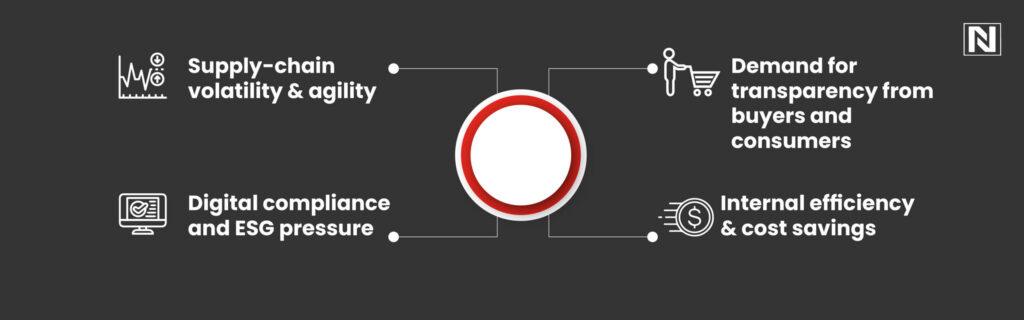
The business landscape of 2025 is shaped by several trends that make Supplier Portal Integration critical:

Why Integration Matters in 2025
  • Supply-chain volatility & agility: Disruptions (e.g., geopolitical instability, raw-material shortages) demand quick supplier shifts. A connected portal lets you onboard new suppliers and reroute orders without delays.
  • Digital compliance and ESG pressure: Regulatory and sustainability requirements mean you must track supplier certifications, compliance documents, and audit trails. Integration ensures real-time access and reduces compliance risk.
  • Demand for transparency from buyers and consumers: Stakeholders expect visibility into sourcing timelines, origin, quality, and delivery. A well-integrated system enables consistent, verifiable updates.
  • Internal efficiency & cost savings: Manually reconciling supplier data with internal systems is labor-intensive. Integration reduces manual overhead, errors, and time delays.

When decision-makers ask for an ROI-driven approach to supplier management, Supplier Portal Integration stands out as a lever for resilience, compliance, and cost control. 

Benefits of Supplier Portal Integration

Here is a snapshot of how Supplier Portal Integration drives business value:

  • Accelerated onboarding and procurement cycles – New suppliers can be onboarded faster, and purchase orders can flow automatically without manual intervention.
  • Improved data accuracy & fewer errors – Automated sync reduces manual data entry mistakes, mismatches between order and invoice, or delayed shipment updates.
  • Improved data accuracy & fewer errors – Automated sync reduces manual data entry mistakes, mismatches between order and invoice, or delayed shipment updates.
  • Stronger supplier relationships & accountability Suppliers self-serve for order updates and payment tracking, reducing back-and-forth communication.
  • Scalability & future readiness – Integrated portals adapt easily as the supplier base grows or as new ERP modules or compliance standards are adopted. 

These advantages make the investment in integration not just a cost but a strategic enabler for better supplier governance, more efficient procurement, and improved bottom-line results. 

ERP Supplier Portal Integration: What It Looks Like

When we talk about ERP Supplier Portal Integration, we mean connecting the supplier portal directly with your organization’s core ERP system such as procurement, finance, inventory, master data, and compliance modules.

This integration enables: 

  • Automated purchase order generation and dispatch.
  • Invoice and payment matching, and straight-through-processing.
  • Automatic inventory reconciliation when goods are received.
  • Supplier master data updates propagating across the entire enterprise system.
  • Real-time dashboards for supplier performance, spend analytics, and compliance tracking.

For decision-makers, ERP integration ensures that supplier interactions are not isolated events but part of a cohesive, enterprise-wide workflow, minimizing risk and maximizing control. 

Supplier Portal Integration Guide 2025 - Step-by-Step Roadmap

Below is a practical roadmap, “an executive-level playbook” for integrating your supplier portal in 2025.

Supplier Portal Integration Guide 2025 - Step-by-Step Roadmap

1. Define Clear Business Objectives

Start by identifying what you want to achieve: faster procurement cycles, better compliance, cost savings, improved supplier collaboration, or scalability. Clear objectives steer your integration project effectively.

2. Audit Current Systems and Supplier Landscape

Map your existing ERP modules, procurement, finance, and supply-chain systems. Also understand how many suppliers you have, their geographic spread, and technical maturity (e.g., ability to receive digital orders, upload documents, etc.).

3. Select the Right Supplier Portal Platform

Choose a portal that supports open APIs, has configurable workflows, supports document uploads, and can integrate cleanly with your ERP or back-office systems.

4. Design Data Flow and Integration Architecture

Establish which data points flow both ways (orders, invoices, shipment status, compliance docs). Decide on real-time sync vs batch updates. Define error handling, audit trails, and logging mechanisms.

5. Pilot with a Subset of Suppliers

Before full-scale rollout, onboard a subset of strategic suppliers and test workflows end-to-end from order creation to payment reconciliation. This pilot reveals integration glitches, data mismatches, or workflow issues.

6. Roll Out Gradually with Change Management

Communicate with internal teams and suppliers. Provide training, onboarding support, and clear documentation on new processes. A phased rollout helps manage complexity and resistance.

7. Monitor, Measure, and Optimize

Use KPIs such as procurement cycle time, invoice processing time, error rates, supplier turn-around-time, cost savings, and compliance adherence. Continuously refine workflows, data validations, and automation rules based on feedback.

This table helps decision-makers evaluate which approach aligns best with their operational maturity and strategic goals.

Conclusion

In a world where supply chains are increasingly complex, compliance demands are rising, and speed and agility are competitive differentiators, Supplier Portal Integration is no longer optional. Especially ERP Supplier Portal Integration, when done right, becomes a lever for operational excellence, cost efficiency, compliance readiness, and supplier collaboration.

For decision-makers (CXOs, VPs, Directors), the time to act is now. Use this Supplier Portal Integration Guide 2025 as a roadmap: define your objectives, pilot carefully, scale systematically, and monitor performance continuously. The result: a future-ready procurement and supply-chain ecosystem that supports growth, transparency, and resilience.
Frequently Asked Questions

What is Supplier Portal Integration?

Supplier Portal Integration connects the supplier portal with internal systems like ERP, procurement, and finance to enable real-time data exchange and seamless workflows. 

It ensures agility, transparency, and compliance across global supply chains, helping businesses respond faster and reduce operational inefficiencies. 

Integration improves data accuracy, accelerates procurement, reduces manual tasks, enhances supplier collaboration, and provides real-time visibility. 

It links the portal directly with ERP systems to automate purchase orders, invoices, inventory updates, and supplier performance tracking. 

Common challenges include supplier readiness, data mismatches, change resistance, and complex data governance – best mitigated by phased rollout and training.

Author