Nirvana Lab

Home / Blog / How Liferay Unlocks Omnichannel Customer Journeys for B2B and B2C 
Table of Contents

How Liferay Unlocks Omnichannel Customer Journeys for B2B and B2C 

Digital transformation has raised the bar for what customers expect. Whether in a B2B or B2C context, they want experiences that are consistent, personal and easy to navigate across every channel. Yet most enterprises still struggle to connect websites, mobile apps, partner portals, and customer service platforms into a single, cohesive journey. 


That’s where Liferay stands apart. Known for its flexible Digital Experience Platform (DXP), Liferay provides the foundation to unify interactions across audiences, products, and geographies. It isn’t just a CMS – it’s an engine for personalized, data-driven engagement that works equally well for B2B and B2C ecosystems. 


Let’s break down how Liferay unlocks B2B and B2C customer journeys and turns fragmented touchpoints into connected experiences. 

The Challenge: Fragmented Journeys in a Multichannel World

In most organizations, data and experiences live in silos. The website is managed by marketing, the portal by IT, and CRM by sales. Each system collects its own customer data but rarely talks to the others.

The result? A disjointed journey. A B2B buyer might explore a product on the site but face inconsistent pricing or documentation on the partner portal. A B2C shopper might start browsing on mobile, add items to a cart and lose that progress when switching to desktop.

What this really means is lost conversions, inconsistent messaging and missed opportunities for loyalty.

Why Liferay Fits Both B2B and B2C Models

Liferay’s architecture is built for complexity. Unlike point solutions that focus on just one use case, it supports multiple business models (B2B, B2C, and even B2B2C) under a single digital backbone.

Here’s how Liferay for B2B and Liferay for B2C stack up:

Aspect Liferay for B2B Liferay for B2C
Customer Type Enterprises, distributors, partners Individual consumers
Key Need Account-based access, contract pricing, portal personalization Mass personalization, omnichannel commerce, scalability
Core Modules Partner portals, supplier management, customer self-service eCommerce integration, product catalogs, content personalization
Integration Focus CRM, ERP, document workflows Marketing automation, payment gateways, customer analytics
Integration Focus Efficiency and role-based workflows Emotional engagement and speed

By combining these two capabilities, organizations can deliver personalized experiences whether they serve thousands of consumers or a handful of enterprise clients. 

How Liferay Unlocks Connected Journeys

Let’s look at the specific ways Liferay helps unify the digital experience across both B2B and B2C audiences.

How Liferay Unlocks Connected Journeys

1. Unified Platform for Every Channel

Liferay DXP consolidates web, mobile, and portal experiences under one umbrella. Instead of managing separate systems for customers, partners, and employees, businesses can create multi-site experiences within a single framework.

This unified structure ensures that content, user data, and brand consistency stay synchronized. A customer reading an article on your main site can seamlessly move to your self-service portal without losing context. 

2. Deep Personalization with Real-Time Context

Modern buyers whether enterprise or individual expect relevance. Liferay uses user segmentation and behavioral analytics to tailor content, recommendations, and workflows.

For B2B, that might mean showing industry-specific case studies or pricing tied to a contract. For B2C, it could mean product recommendations based on browsing history or loyalty status.

The personalization engine dynamically adjusts experiences based on roles, geography, and engagement patterns, turning every interaction into a contextually relevant one.
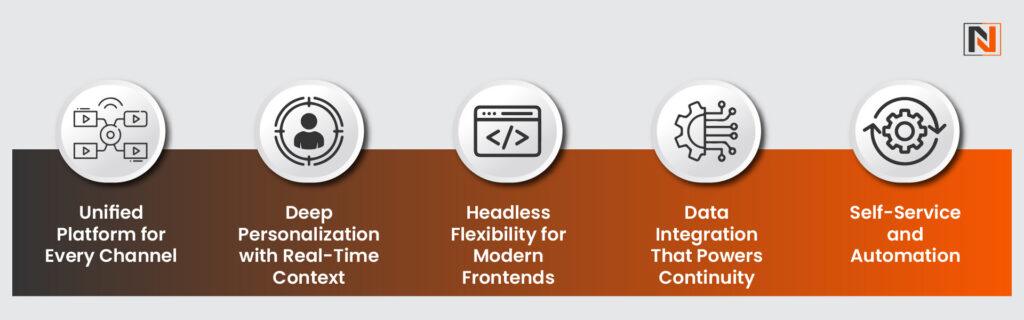
3. Headless Flexibility for Modern Frontends

Customer experiences evolve fast. Today’s brands want the freedom to design mobile apps, microsites, or IoT touchpoints without being locked into a monolithic system.

Liferay’s headless APIs make that possible. Content and data are delivered via APIs to any channel (React, Angular, or even voice assistants).

This decoupled model gives developers creative freedom while maintaining a centralized governance layer for content and permissions.

4. Data Integration That Powers Continuity

The biggest barrier to omnichannel success isn’t content - it’s data fragmentation. Liferay integrates with CRMs like Salesforce, ERPs like SAP, and analytics tools to build a single view of the customer.

Imagine a B2B buyer logging into a portal: Liferay can automatically pull data from the ERP to show order status, from the CRM to suggest renewal options and from the CMS to display relevant product updates.

For B2C, it might merge purchase history, cart data, and support tickets into one unified profile, ensuring every channel reflects the same story.

5. Self-Service and Automation

Customers increasingly prefer solving problems themselves. Liferay’s self-service capabilities empower both B2B and B2C audiences with personalized dashboards, ticket tracking, FAQs, and guided workflows.

For example, a telecom provider can let enterprise customers manage their own service requests and billing through a secure portal while individual users access troubleshooting guides on the same platform.

This reduces support costs and boosts satisfaction by putting control in the customer’s hands.

Real-World Impact: From Fragmented to Fluid

To see how this translates to results, consider a global manufacturer that uses Liferay for B2B and Liferay for B2C simultaneously.

  • For distributors (B2B): The company built a secure portal where partners can view stock levels, manage orders, and access co-branded marketing materials.
  • For consumers (B2C): It runs a public-facing site that showcases products, handles e-commerce, and integrates with a loyalty app.
  • The outcome: 30% faster order processing, a 25% lift in returning users, and a single customer database serving both business units.


This kind of transformation shows how a unified experience strategy creates measurable business outcomes not just better UX. 

Building Omnichannel Maturity with Liferay

Omnichannel transformation isn’t a single project. It’s a maturity journey that evolves through clear stages:

Stage Liferay for B2B Liferay for B2C
Multi-Channel Presence Independent websites and apps Separate web and mobile experiences
Cross-Channel Consistency Shared design and messaging Common templates, brand alignment
Data Integration Connected systems and APIs Single customer view, shared CRM data
Omnichannel Personalization Dynamic content and automation Role-based dashboards, contextual offers
Experience Orchestration Unified platform managing all channels AI-driven recommendations, headless delivery

Liferay accelerates progress through these stages by providing both the technology backbone and the flexibility to adapt to each organization’s structure. 

Business Outcomes That Matter

Decision-makers often ask: what’s the ROI of investing in a DXP like Liferay? The impact cuts across several dimensions:

  • Revenue Growth: By aligning content and commerce, businesses increase conversion rates and deal velocity.
  • Customer Retention: Consistent experiences reduce churn by making every interaction frictionless.
  • Operational Efficiency: A single platform reduces redundant tools and streamlines content management.
  • Speed to Market: With reusable components and headless APIs, teams can launch new channels faster.
  • Compliance and Security: Centralized governance ensures data privacy and regulatory consistency across regions.


In essence, Liferay doesn’t just enhance user experience – it creates business agility. 

The Strategic Edge for Decision-Makers

For CXOs and digital leaders, choosing Liferay isn’t about adopting another platform. It’s about building a connected ecosystem that adapts to customer behavior, integrates enterprise systems and scales with business growth.

As organizations pivot toward AI-driven and data-centric models, the ability to manage unified journeys across B2B and B2C landscapes will define competitive advantage. Liferay’s open architecture, proven scalability and enterprise-grade security make it a long-term enabler of that vision.

Final Thought

Omnichannel isn’t just a buzzword anymore - it’s the foundation of modern digital strategy. Liferay unlocks B2B and B2C customer journeys by turning complex ecosystems into simple, connected experiences that drive loyalty, efficiency and growth.

Whether you’re a B2B enterprise building partner portals or a B2C brand aiming for personalized engagement, Liferay delivers one thing that matters most: continuity of experience, powered by intelligence and integration.

Frequently Asked Questions

What is Liferay used for?

Liferay is a Digital Experience Platform (DXP) that helps businesses create, manage and integrate personalized web portals, intranets and customer experiences across multiple channels. 

Liferay for B2B enables role-based portals, account management, and ERP/CRM integrations that simplify complex enterprise interactions and self-service workflows. 

Liferay for B2C enhances customer engagement through personalization, eCommerce integration, and omnichannel content delivery across web, mobile, and apps. 

It unifies content, data, and user experiences across platforms, ensuring consistent, connected interactions for every customer touchpoint. 

Yes. Liferay easily connects with CRMs, ERPs, analytics tools and third-party apps to create a single view of the customer and streamline operations. 

Author