The enterprise world has witnessed waves of automation, from rule-based systems to predictive AI. But 2025 marks the era of something far more transformative – Agentic AI in the enterprise. Unlike traditional AI, which follows predefined prompts and instructions, Agentic AI acts with autonomy. It doesn’t just respond (it reasons, decides, and executes actions) aligned with business goals.
For enterprise leaders, understanding this shift isn’t optional anymore. It’s strategic.
What Is Agentic AI and Why It Matters for Enterprises
Agentic AI represents the next evolution of artificial intelligence. It’s built on the foundation of Large Language Models (LLMs), but with added autonomy and goal-oriented intelligence. These systems can plan tasks, monitor progress, and self-correct much like an efficient employee who understands business objectives and takes initiative.
For instance, in enterprise applications, Agentic AI can:
- Analyze complex business data, derive insights, and take corrective actions automatically.
- Manage workflows end-to-end without constant human prompts.
- Learn continuously from real-world feedback to improve efficiency.
In short, Agentic AI in enterprise applications moves organizations from “AI assistance” to “AI delegation.”
DID YOU KNOW
The Agentic AI market is poised for explosive growth, projected to surge from USD 7.06 billion in 2025 to USD 93.20 billion by 2032, registering a remarkable CAGR of 44.6%.
Why CXOs Need to Pay Attention
Enterprise leaders often ask: “Is Agentic AI just another hype cycle, or is it truly business-critical?” Here’s the reality - it’s already reshaping enterprise productivity and cost structures.
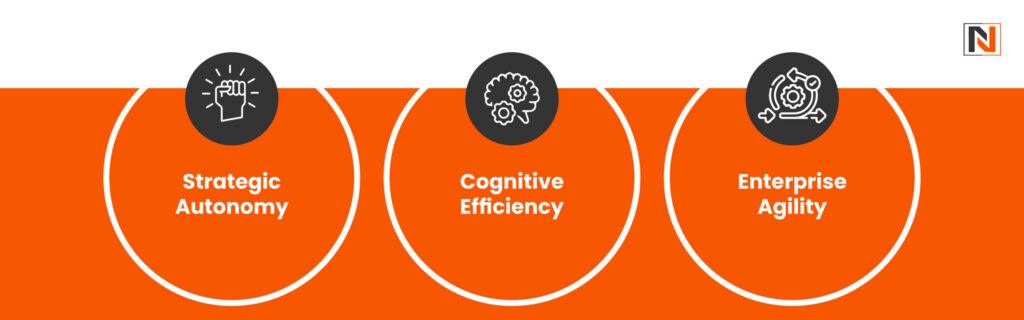
1. Strategic Autonomy
Agentic AI enables business systems to take initiative. For example, a customer service AI can not only respond to queries but also detect recurring complaints, escalate issues, and suggest policy changes all autonomously.
2. Cognitive Efficiency
Where traditional automation executes tasks, Agentic AI thinks ahead. It reduces decision bottlenecks by connecting siloed data systems and anticipating business needs before humans do.
3. Enterprise Agility
In today’s volatile market, adaptability determines survival. Agentic AI continuously learns from data streams (market fluctuations, customer behaviors, or operational metrics) and updates enterprise workflows in real time.
Must Know Facts About Agentic AI in the Enterprise
Every leadership team should be aware of these key facts when evaluating Agentic AI in the enterprise strategy:
| Aspect | Traditional AI | Agentic AI |
|---|---|---|
| Decision-making | Reactive (based on predefined prompts) | Proactive (goal-driven and self-directed) |
| Human Input Required | High – needs supervision | Low – operates with autonomy |
| Integration | Task-specific | Cross-functional, system-wide |
| Learning Capability | Limited to training data | Continuous, real-time learning |
| Outcome | Process automation | Intelligent orchestration and innovation |
This table highlights a crucial shift: enterprises are moving from AI that helps to AI that acts.
The Business Benefits of Agentic AI for Large Organizations
Enterprises adopting Agentic AI are not just automating - they’re transforming. Below are some tangible benefits of Agentic AI for large organizations that leadership should evaluate closely:
1. Cost Optimization Through Autonomous Operations
Agentic AI reduces manual interventions in complex processes like procurement, supply chain management, and IT service delivery. By autonomously identifying inefficiencies and reallocating resources, it drives substantial OPEX savings.
2. Accelerated Decision-Making
With multi-agent collaboration, decisions that once took days can now be made in seconds. Imagine a financial AI agent preparing predictive revenue forecasts, while another agent simultaneously validates compliance and both communicate to finalize actions autonomously.
3. Continuous Innovation
Agentic AI systems evolve constantly. They observe new data patterns, learn from user interactions, and improve without explicit reprogramming. This creates a self-improving enterprise ecosystem where innovation is built into the fabric of daily operations.
4. Improved Risk Governance
Enterprise-grade Agentic AI can be configured with ethical constraints and compliance protocols, ensuring that all autonomous decisions align with regulatory frameworks. This is critical for industries like BFSI, healthcare, and government.
5. Scalable Personalization
In customer experience, Agentic AI can personalize engagement across millions of users simultaneously (analyzing tone, intent, and sentiment) in real time to drive context-aware responses that improve loyalty and retention.
Real-World Enterprise Use Cases
Agentic AI is already making an impact across large organizations globally:
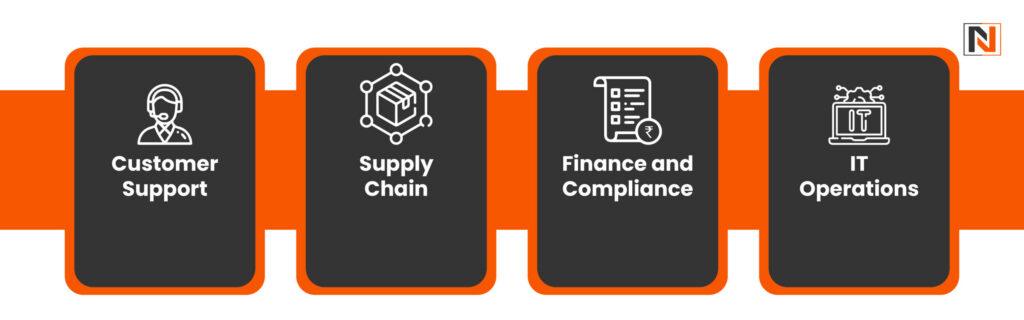
- Customer Support Automation: Multi-agent systems autonomously handle customer inquiries, escalate complex cases, and update CRM data without human intervention.
- Supply Chain Optimization: Agentic AI forecasts demand, negotiates with suppliers (using predefined business rules), and triggers logistics operations dynamically.
- Finance and Compliance: Agents perform reconciliations, detect anomalies, and ensure compliance with financial regulations in real time.
- IT Operations: Self-healing IT systems use Agentic AI to identify failures, execute patches, and restore operations autonomously.
Each of these examples demonstrates not just efficiency but intelligence with intent – the essence of Agentic AI.
Building an Agentic AI Strategy: What Leadership Should Do Next
To make Agentic AI in the enterprise a reality, CXOs and transformation leaders should focus on three strategic imperatives:
1. Redesign Workflows for AI Autonomy
Legacy workflows designed for human intervention need rethinking. Shift toward modular, API-first architectures that allow AI agents to operate independently yet collaboratively.
2. Prioritize Data Interoperability
Agentic AI thrives on connected data. Invest in enterprise data platforms and governance frameworks that enable real-time data access across departments and systems.
3. Establish Human-AI Governance
While autonomy is a strength, human oversight remains vital. Define clear rules for accountability, transparency, and ethics. Create “AI supervisors” - human teams responsible for guiding and auditing autonomous agents.
The Road Ahead
The rise of Agentic AI in enterprise applications isn’t a future scenario - it’s unfolding now. From IT to finance, operations to marketing, organizations are reimagining roles, decisions, and outcomes.
For leaders, the question isn’t whether to adopt Agentic AI but how fast they can align their enterprise systems, culture, and strategy to leverage it.
Those who act early will not only automate better but innovate faster, creating enterprises that think, adapt, and evolve on their own.
Final Thought
Agentic AI in the enterprise represents more than a technological leap, it’s an organizational awakening. The enterprises that empower autonomous intelligence today will define the competitive landscape tomorrow.
Frequently Asked Questions
What is Agentic AI in the enterprise
Agentic AI is an autonomous form of artificial intelligence that can plan, decide, and execute tasks aligned with business goals without constant human input.
How is Agentic AI different from traditional AI?
Unlike traditional AI that reacts to prompts, Agentic AI proactively takes actions, learns continuously, and operates across multiple enterprise functions.
What are the key benefits of Agentic AI for large organizations?
It improves efficiency, reduces operational costs, accelerates decision-making, and enables continuous innovation through autonomous learning
Which enterprise functions benefit most from Agentic AI?
Customer service, supply chain, finance, compliance, and IT operations gain the most through intelligent automation and predictive decision-making.
How can enterprises get started with Agentic AI?
Start by modernizing data systems, integrating cross-functional workflows, and establishing governance to ensure safe, scalable AI autonomy.